

Cite Part I · DOI, scholarly record & keywords →


Couldn't load pickup availability
- Summaries
- Videos
- Podcasts
- PowerPoints
- Glossary

How to Design an Emotion, Part I: The Problem of Feeling and Emotion (Deep Dive)
What is an emotion? Before anyone measures, models, or treats emotion, someone has to say what it is. This Analyze This deep dive takes apart Part I of How to Design an Emotion: The Problem of Feeling and Emotion, using pleasure as a case study for the Distinctive Feeling View and the Attitudinal View.

Ch01 - Why We Don’t Agree on the Definition of Emotion
We don’t agree on what emotion is because the two dominant theories explain different parts of the same process but fail to explain it as a whole.

Ch01 - Is It Emotion or Just Physical Arousal?
What feels like attraction or emotion on a first date may be nothing more than physical arousal, until the mind interprets it as meaning.

The Problem of Feeling and Emotion (Deep Dive)
In this episode of Analyze This, Dr. Zoe Campbell, the affective neuroscientist in the novel God Father by Cézjah, also the author of How to Design an Emotion, directs two AI pundits through Part I: The Problem of Feeling and Emotion. Before anyone measures, models, or treats emotion, someone has to say what an emotion is. We test pleasure as a case study, watch the Distinctive Feeling View and the Attitudinal View each seize half the truth, and land on three rules: a part is never the whole; evidence is not identity; a name is not understanding. An emotion needs a self-governing agent, someone who feels a change, interprets what it means, and holds that meaning to the standard of reason. Framework: Part I · The Problem of Feeling and Emotion From: How to Design an Emotion (Universal Moral Concepts II) Author: Cézjah (Cecil John) Scholarly / DOI landing: https://newintellectual.com/how-to-design-an-emotion/part-1 Book product: https://newintellectual.com/products/how-to-design-an-emotion Site: https://cezjah.com The views expressed in this podcast are not necessarily those of the author.
- Play Now
-

-

-
21:11


The Problem of Feeling and Emotion (How It Works)
The how-it-works edition of Analyze This, companion to the value-proposition episode. Dr. Zoe Campbell directs two AI pundits through the mechanics of Part I: The Problem of Feeling and Emotion — how Chapter 1 builds its method step by step, using pleasure as the diagnostic test case for what any theory of emotion must preserve.
- Play Now
-
-
-
38:49

Part I: The Problem of Feeling and Emotion
Detailed deck for Part I: The Problem of Feeling and Emotion from How to Design an Emotion (Universal Moral Concepts II) by Cézjah (New Intellectual LLC). Before anyone measures, models, or treats emotion, someone has to say what an emotion is. This deck walks Part I of How to Design an Emotion. It tests pleasure as a case study, shows how the Distinctive Feeling View and the Attitudinal View each seize half the truth, and lands on three rules: a part is never the whole, evidence is not identity, and a name is not understanding. An emotion needs a self-governing agent, someone who feels a change, interprets what it means, and holds that meaning to the standard of reason.
- View Slides
-

- 15 slides
- Browse Now...
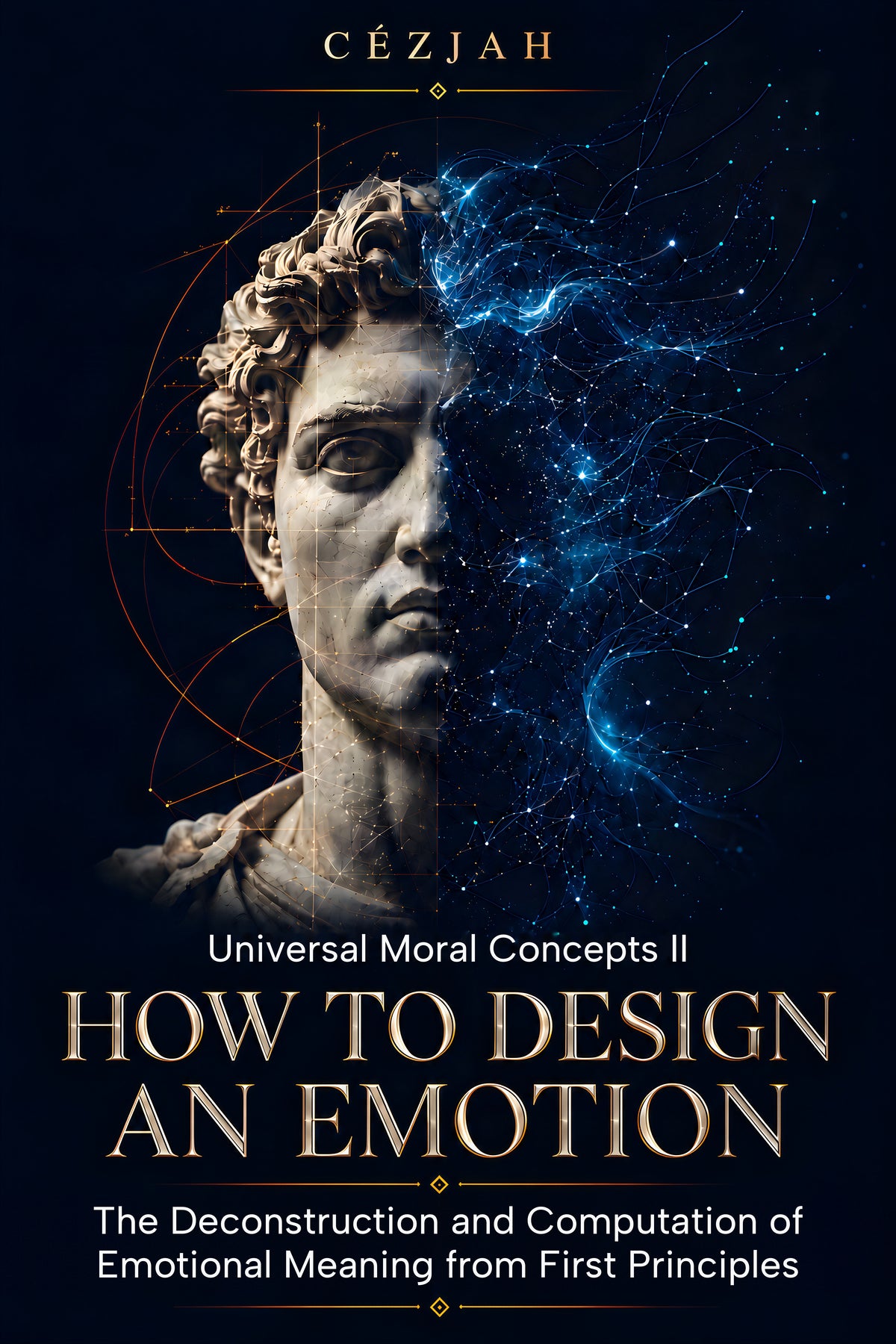
Thank You for Your Interest!
You’ve successfully signed up to be notified when the next release of Part I · The Problem of Feeling and Emotion is available. We’re thrilled to share this journey with you and will keep you updated with the latest release information.
Stay Connected
Make sure you don’t miss any updates! Subscribe to our newsletter for exclusive release news, insights from the author, and special content directly to your inbox.
We can’t wait to share the official release of Part I · The Problem of Feeling and Emotion with you. Happy reading!