

Cite this working paper · DOI 10.5281/zenodo.23631049 →


Couldn't load pickup availability
- Summaries
- Videos
- Podcasts
- PowerPoints
- Glossary

Working Paper 1: The Theory of Constrained Identity (Deep Dive)
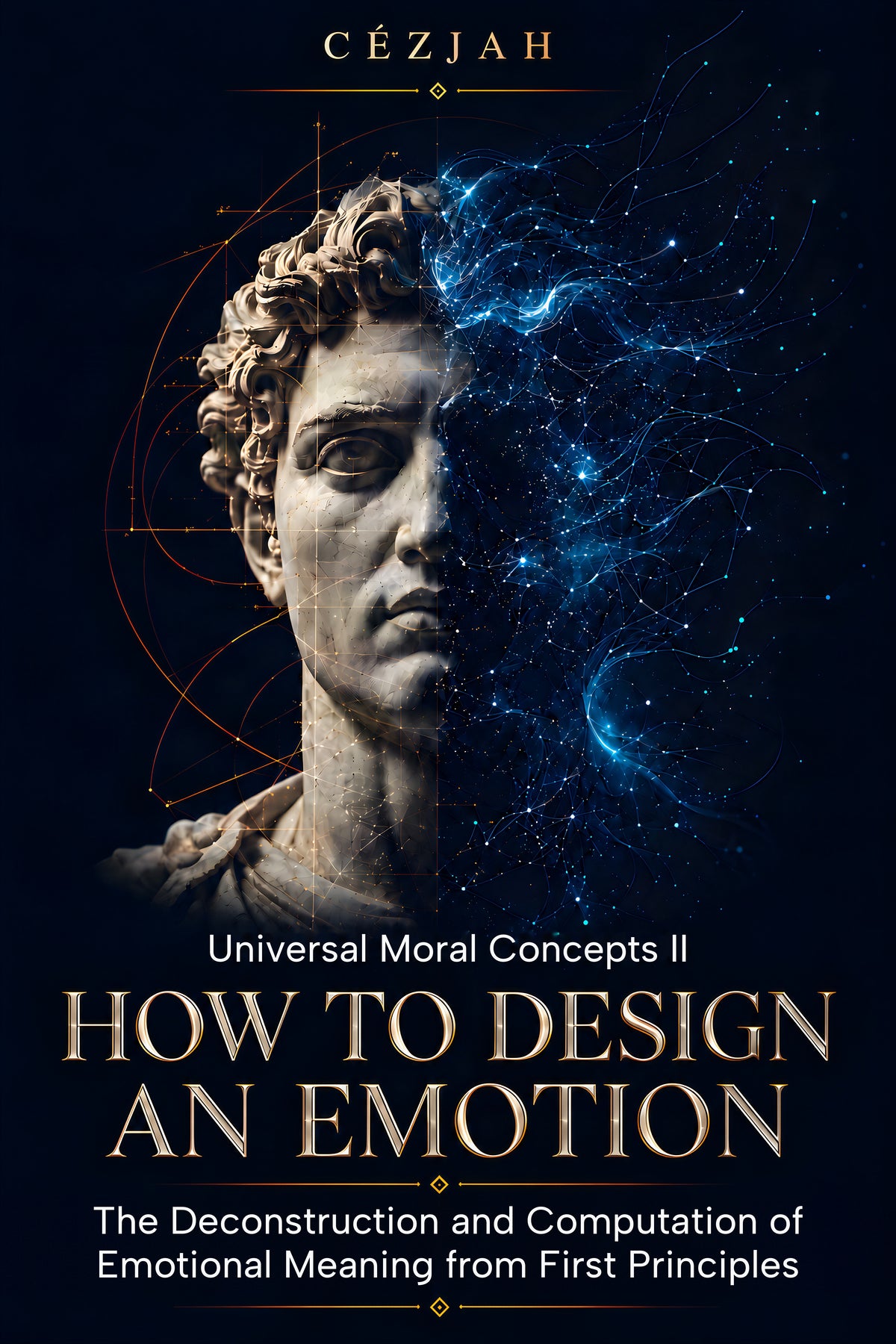
When emotion science gave up on definitions, it confused what makes a thing what it is with what makes it typical. This deep dive takes apart Working Paper 1 of How to Design an Emotion by Cézjah: four layers, five invariants, and the end of the rules versus prototypes war. Series: Universal Moral Concepts II.

The Theory of Constrained Identity (Deep Dive)
In this episode of Analyze This, Kunle Diébédo, the acclaimed architect in the novel God Father by Cézjah, also the author of How to Design an Emotion, directs two AI pundits through Working Paper 1: The Theory of Constrained Identity. When emotion science gave up on definitions, it confused what makes a thing what it is with what makes it typical. This episode puts identity conditions back upstream and typicality downstream. The Theory of Constrained Identity separates four layers, constraint, instance, category, and goal, held together by five invariants. With goals kept apart from identity, the old war between classical rules and prototypes dissolves into a faux dichotomy. Along the way: folk anger as a worked case, and a theory built to be executable and inspectable, down to the code. Framework: Working Paper 1 · The Theory of Constrained Identity: Identity Conditions Upstream, Typicality Downstream From: How to Design an Emotion (Universal Moral Concepts II), Part II · The Nature of Concepts Author: Cézjah (Cecil John) Scholarly / DOI landing: https://newintellectual.com/products/working-paper-01-constrained-identity DOI: https://doi.org/10.5281/zenodo.23631050 Working paper product: https://newintellectual.com/products/working-paper-01-constrained-identity Site: https://cezjah.com The views expressed in this podcast are not necessarily those of the author.
- Play Now
-

-

-
54:59


The Theory of Constrained Identity (Value Proposition)
The value-proposition edition of Analyze This, companion to the how-it-works episode. Kunle Diébédo directs two AI pundits through why Working Paper 1: The Theory of Constrained Identity matters — what it uniquely offers emotion science, what problems it solves that rival accounts cannot, and why separating identity conditions from typicality changes the field.
- Play Now
-
-
-
46:20

Working Paper 01: The Theory of Constrained Identity
Detailed deck for Working Paper 01: The Theory of Constrained Identity from How to Design an Emotion (Universal Moral Concepts II) by Cézjah (New Intellectual LLC). When emotion science gave up the search for emotional essences, it also lost an answer to a prior question: what makes an episode of anger an episode of anger rather than a useful guess under a familiar name? Several influential accounts relocate identity conditions downstream into similarity, prediction, categorization, and agreement, leaving error, disagreement, and revision without a standard. The Theory of Constrained Identity (TCI) is the repair. It orders four layers with a direction of dependence: a constraint layer that fixes identity conditions, an instance layer that realizes them, a category layer that groups admitted instances by typicality, and a goal layer that evaluates both without supplying identity.
- View Slides
-

- 15 slides
- Browse Now...
Thank You for Your Interest!
You’ve successfully signed up to be notified when the next release of The Theory of Constrained Identity: Identity Conditions Upstream, Typicality Downstream is available. We’re thrilled to share this journey with you and will keep you updated with the latest release information.
Stay Connected
Make sure you don’t miss any updates! Subscribe to our newsletter for exclusive release news, insights from the author, and special content directly to your inbox.
We can’t wait to share the official release of The Theory of Constrained Identity: Identity Conditions Upstream, Typicality Downstream with you. Happy reading!