

Constructivist Semiotics and the Constructivist Semiotic Sign: An Executable Architecture of Meaning
Cite this working paper · DOI 10.5281/zenodo.23631051 →


Couldn't load pickup availability
- Summaries
- Videos
- Podcasts
- PowerPoints
- Glossary

Working Paper 2: Constructivist Semiotics and the Constructivist Semiotic Sign (Deep Dive)
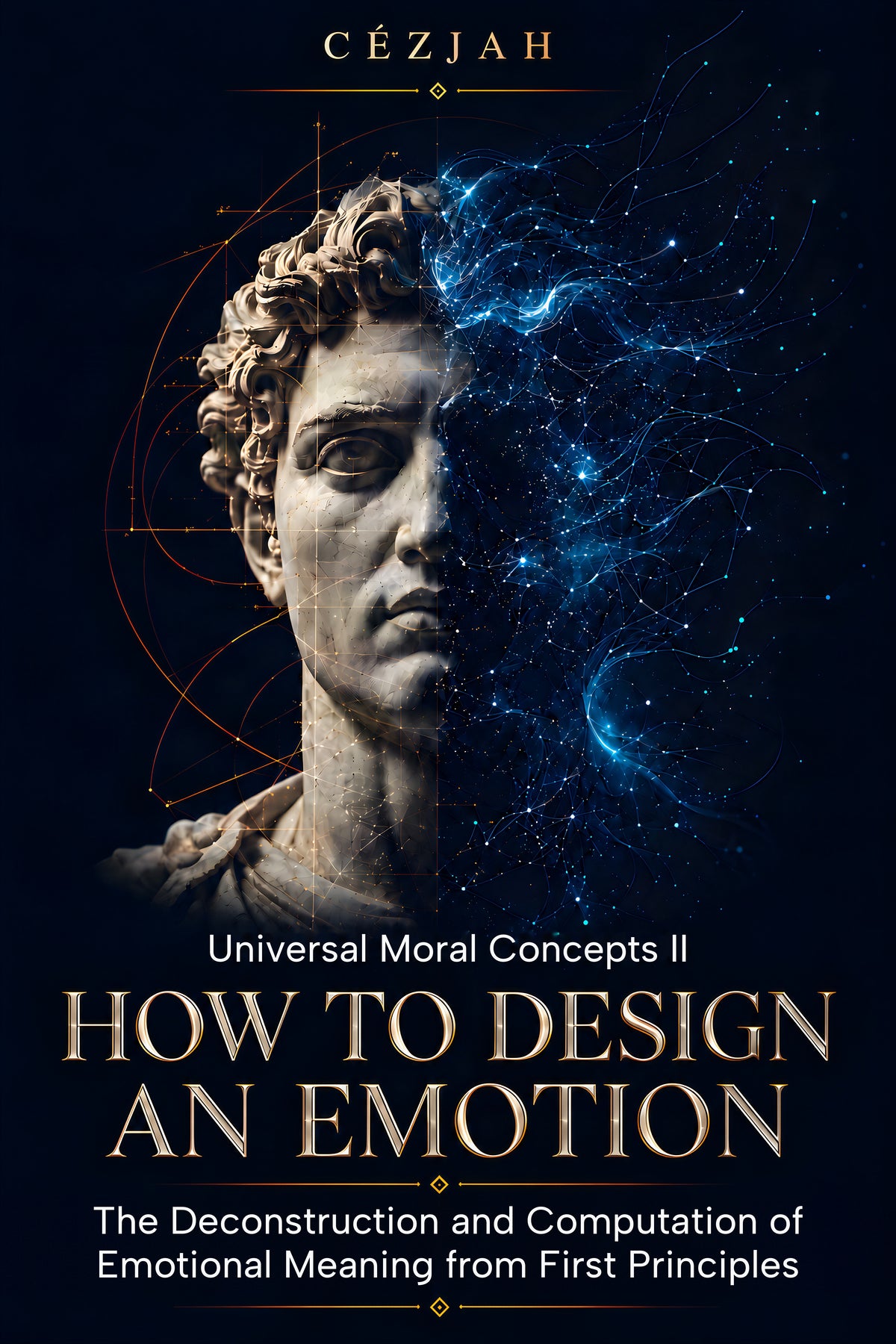
What makes a sign mean something, and what makes one reading right and another wrong? This deep dive takes apart Working Paper 2 of How to Design an Emotion by Cézjah: automatic attribution versus interpretation, and a sign of five distinct constituents built to run in code.

Constructivist Semiotics and the Constructivist Semiotic Sign (Deep Dive)
In this episode of Analyze This, Ricardo A. González, the computer scientist in the novel God Father by Cézjah, also the author of How to Design an Emotion, directs two AI pundits through Working Paper 2: Constructivist Semiotics and the Constructivist Semiotic Sign. What makes a sign mean something, and what makes one reading of it right and another wrong? This episode argues that meaning is neither stored inside symbols nor free for the taking, and that handing interpretation to structure, causation, association, or statistics leaves no one to answer for a reading. Constructivist Semiotics separates automatic attribution, the non-conscious taking of one thing as a sign of another, from interpretation, a conscious act under a goal the interpreter adopts for that act. The Constructivist Semiotic Sign holds five constituents that must stay distinct: the Identifier, the Concept, the Construct, the Referent, and the Interpreter. Along the way: Saussure’s dyad and Peirce’s triad refactored into one sign, Kumiko Tanaka-Ishii’s semiotics of programming, a red apple, a tree falling with no one present, gamelan heard for the first time, and an architecture of meaning built to be executed and tested in code. Framework: Working Paper 2 · Constructivist Semiotics and the Constructivist Semiotic Sign: An Executable Architecture of Meaning From: How to Design an Emotion (Universal Moral Concepts II), Part III · The Architecture of Meaning Author: Cézjah (Cecil John) Scholarly / DOI landing: https://newintellectual.com/products/working-paper-02-constructivist-semiotics DOI: https://doi.org/10.5281/zenodo.23631052 Working paper product: https://newintellectual.com/products/working-paper-02-constructivist-semiotics Site: https://cezjah.com The views expressed in this podcast are not necessarily those of the author.
- Play Now
-

-

-
45:09


Constructivist Semiotics and the Constructivist Semiotic Sign (Value Proposition)
The value-proposition edition of Analyze This, companion to the how-it-works episode. Kunle Diébédo directs two AI pundits through why Working Paper 2: Constructivist Semiotics and the Constructivist Semiotic Sign matters — what it uniquely contributes, which long-standing problems in sign theory it resolves, and why it reshapes how we understand meaning and emotion.
- Play Now
-
-
-
41:29

Working Paper 02: Constructivist Semiotics and the Constructivist Semiotic Sign
Detailed deck for Working Paper 02: Constructivist Semiotics and the Constructivist Semiotic Sign from How to Design an Emotion (Universal Moral Concepts II) by Cézjah (New Intellectual LLC). What makes a sign mean something, and what makes a reading of it right or wrong? Meaning is neither a property of symbols nor a free choice, and handing interpretation to structure, causation, association, or statistics leaves no one to answer for a reading. This work separates automatic attribution, the non-conscious taking of one thing as a sign of another, from interpretation, a conscious act under a goal the interpreter adopts for that act. On that basis it states Constructivist Semiotics through the Constructivist Semiotic Sign (CSS), whose five constituents must stay distinct: the Identifier, the Concept, the Construct, the Referent, and the Interpreter.
- View Slides
-

- 16 slides
- Browse Now...
Thank You for Your Interest!
You’ve successfully signed up to be notified when the next release of Constructivist Semiotics and the Constructivist Semiotic Sign: An Executable Architecture of Meaning is available. We’re thrilled to share this journey with you and will keep you updated with the latest release information.
Stay Connected
Make sure you don’t miss any updates! Subscribe to our newsletter for exclusive release news, insights from the author, and special content directly to your inbox.
We can’t wait to share the official release of Constructivist Semiotics and the Constructivist Semiotic Sign: An Executable Architecture of Meaning with you. Happy reading!